What a small farm can promise, and what it cannot
A small farm can promise that the person growing your vegetables is the person you message. It can promise produce cut for your order rather than pulled from a cold room, and it can promise a straight answer when something is short.
It cannot promise unlimited volume, identical sizing every week, or a crop the weather has taken. It cannot promise tomatoes in the middle of winter, and it should not pretend it can.
The kitchens that work well with us are the ones that treat those limits as part of the brief rather than an obstacle. A menu built around a farm is a different menu from one built around a wholesaler's catalogue, and in our experience it is a better one.
Starting a standing order: the first conversation
The first conversation is not about price lists. It is about what you cook.
Tell us what kind of kitchen you run, roughly what you get through in a week, and which dishes depend on which vegetables. Tell us what has been going wrong with your current supply, if anything. A chef who says "I can never get good spinach" is giving us the most useful sentence of the conversation.
From there we tell you what we grow, what we can hold for you, and what we genuinely cannot promise. If your requirement is bigger than the farm, we will say so at the start rather than at the end of a season.
Then we agree two things: a weekly list, and a cut-off for confirming it. Everything else follows from those.
Planning a menu around seasonal availability
Seasonal menu planning is mostly a matter of working a few weeks ahead. If you know tomatoes will thin out, you can build the menu so that the tomato dish is at its best while tomatoes are at their best and gone, or transformed, when they are not.
Ask us what is coming. We can tell you what is nearly ready, what is finishing, and what we are about to plant. That is not a forecast with a guarantee attached, but it is more than a wholesaler will tell you.
The useful habit is to have a second use for everything. A glut of patty pans is a problem if you have one patty pan dish and an opportunity if you have three. Kitchens that preserve, pickle or turn a surplus into a soup get far more out of a seasonal supply than kitchens that do not.
Quantities, consistency and substituting varieties
Consistency is the word that comes up most when chefs talk about suppliers, and it is worth being precise about what it means.
If consistency means "the same list, the same size, the same week, forever", a small farm is the wrong supplier and we will tell you so. If consistency means "the order arrives, the quality is right, and I am told in advance when something changes", that is achievable and it is what we aim at.
Quantities are agreed weekly. Where a variety falls short, we offer what we have instead of leaving a gap, and you decide whether it works for the menu. A substitution agreed in a message is not the same as a substitution discovered at the pass.
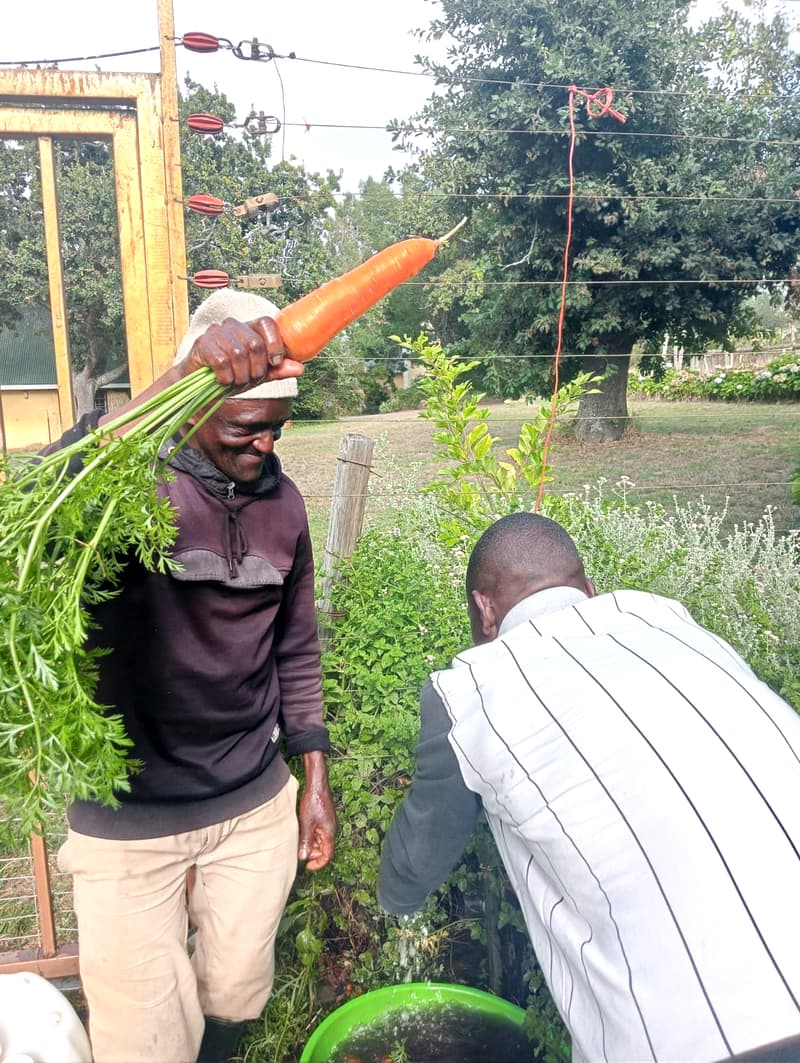
Sizing will vary. A carrot is not a manufactured item. If a dish depends on a precise size, say so and we will tell you whether we can sort for it.
What we supply beyond vegetables
Herbs, for a start, which are usually the thing a kitchen notices first: coriander and basil in season, cut close to the day.
Then the pantry: pestos such as stinging nettle, coriander and basil, homemade mayonnaises, and soups including chicken and vegetable, spinach and pumpkin. These are made in our kitchen from our own produce, in small batches.
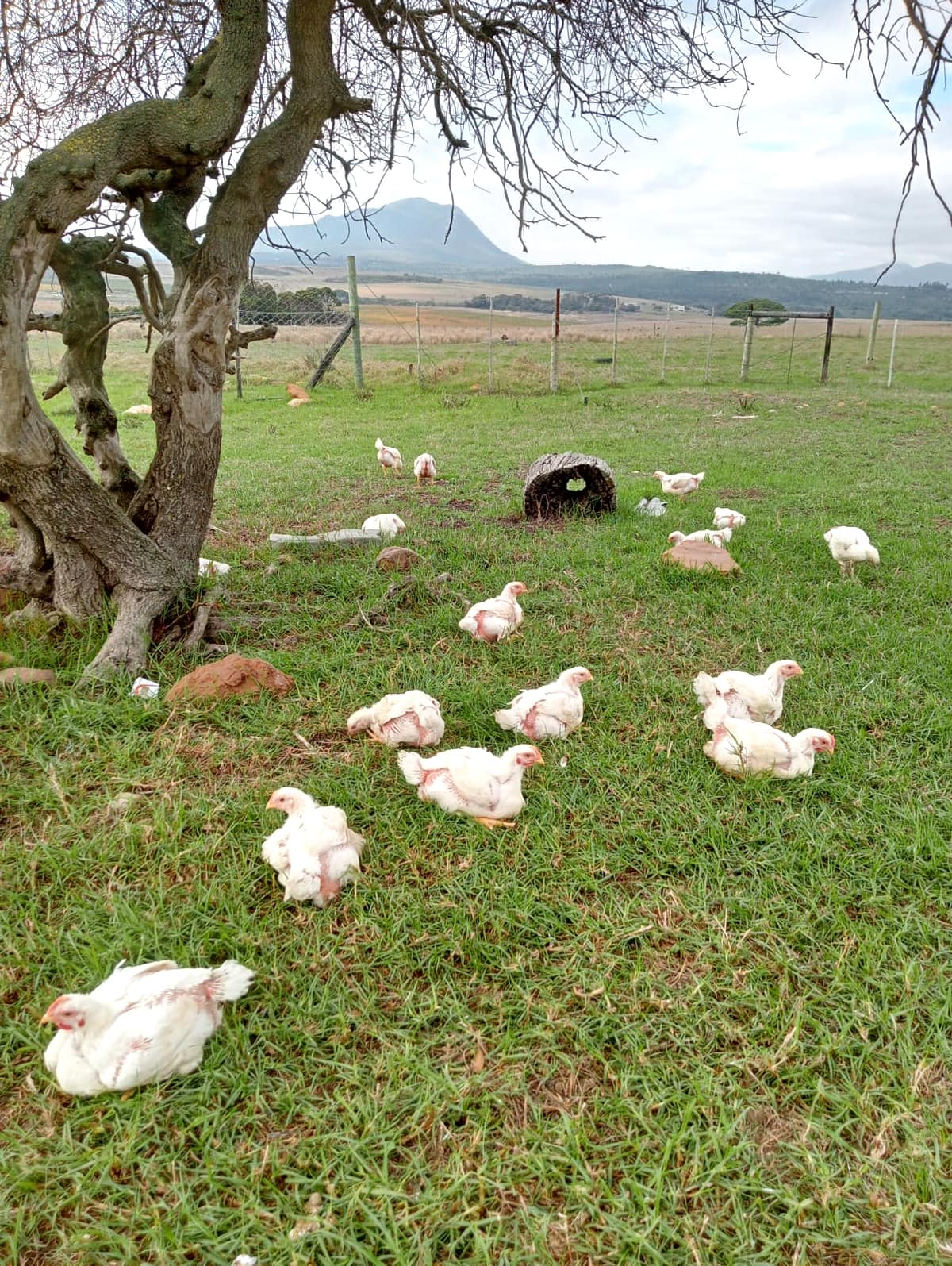
And eggs and whole free-range chicken. A whole bird is more useful to a kitchen than it looks: the roast, then the frame for stock, then the stock in a sauce or a soup. It is cheaper per use than buying three cuts and it tastes of more.
Supplying Hermanus, Onrus, Fisherhaven and Caledon
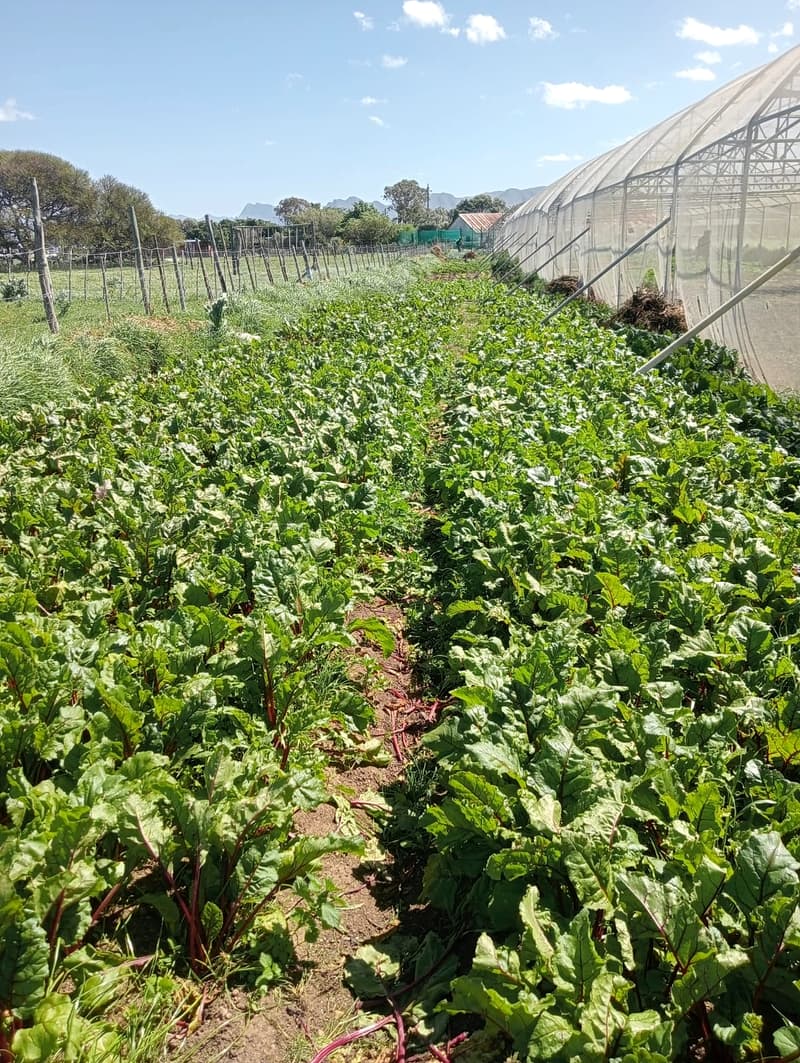
We supply restaurants and health shops in Hermanus, Onrus, Fisherhaven and Caledon. The produce comes from gardens across the Overberg, cut the morning it is delivered rather than shipped in from a national distribution chain.
Delivery arrangements are agreed with each customer rather than fixed on a page, because a schedule that suits one kitchen does not suit the next. Tell us where you are and what you need and we will tell you honestly how it can work.
Our trade supply page sets out the wider picture, and supplying Hermanus kitchens covers that route specifically.
Start the conversation
Email is best for a first enquiry: it gives us something to read properly and to keep. WhatsApp is faster once we know each other.
Tell us your kitchen or shop, your town, what you need weekly and roughly how much. We will reply with what we can do, and if the answer is no, we will say that too.